
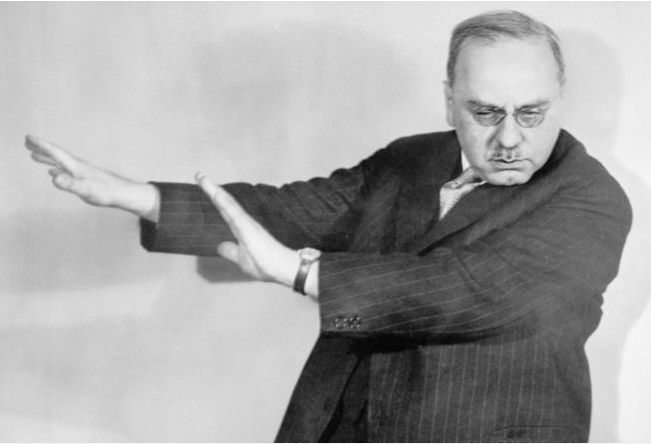
What if you could free yourself of the past?
You probably think I’m knocking at your door, black tie, white shirt. Nevertheless, I brought something more psychology than Christ-y.
The Courage to Be Disliked, by Ichiro Kishimi and Fumitake Koga, offers guidance toward feeling happy and free by the acceptance of principles by early-20th century psychologist Alfred Adler. They’re comparable to Stoic philosophy, so if you’re on the Ryan Holiday train as 500-million something are, hop on and enjoy.
Without a method for letting go of the past, you’ll dislike yourself, resent others, and be unhappy. So here’s how to let go of the past according to ideas from Adlerian psychology and two leading authors on the subject.
(1) Accept the Past Does Not Exist
It’s good we can look to history. Success in any endeavor depends on self-reflection. “Those who do not remember the past,” ancient philosopher Seneca writes, “are condemned to repeat it.”
Therefore, we have an opportunity when looking at the past. In particular, mistakes. We can ask, “What should I do from now on?”. But most respond less productively. In fact, there are only two other responses.
Adler argues these responses include: (1) “that bad person,” and (2) “poor me.” Think of all the times you’ve flipped back and forth between these responses. If we practice our default response to be, “what should I do from now on?”, it helps us to accept there’s no going back (the past does not exist) and to determine how we should move forward.
To sum up, “what should I do from now on?” is one of the most powerful questions you can ask.
And what ultimately is the answer? Adler says:
”What I should do is face my own tasks in my own life without lying. “
That’s all you have to do.
(For elaboration on “tasks,” read Part I of my series How You Should Eliminate Problems.)
(2) Accept the Past Does Not Matter
“Okay, the past does not exist. But the past does not matter?” you might exclaim. “What of a murderer? What about when I was taken advantage of by x, y, z, q, t, and x (again)?”.
Okay, killing someone or being abused is unfortunate. But you’re faced with three options for response, again. These include:
- “That bad person”
- “Poor me”
- “What should I do from now on?”
I wouldn’t wish pain on a killer or abuser as much as I wouldn’t wish pain on their victims. Either party can accept that what’s done is done or continue to blame, continue to choose misery. It’s outside your control, or so Adler says, not your task.
What is in your control? So Holiday and the Stoics preach: your own response.
(3) Accept the Future is a Blank Page
“Accepting the future is a blank page,” a principle that brightens up the previous mentioned, is the biggest reason we should ask the penultimate question, “what should I do from now on?”. The past is gone and no one can know what the future holds, so what should you do moving forward? As Doc Brown says, anything can happen.

Most people, certainly, will be caught up on the other choices for response—and that’s okay. You don’t have to.
Courage to Be Disliked and Adler uses an analogy, “live like you’re dancing.” If you fall out of step, no one’s stopping you from running off the dance floor or stomping on your partner’s toe. But, too, no one minds, and no one but yourself is preventing you, if you learn from it, shrug it off, and continue dancing. Furthermore, becoming skillful. Nobody else can dance for you.
This is choosing the pursuit of superiority over feelings of inferiority. If you’re choosing the latter, for example, you’re likely not reading this.
Above all, you shouldn’t accept lies others or yourself say regarding how the past affects the future. Your choice of lifestyle is always up to you, regardless of the influences of your past.
Conclusion
Imagine letting go of a slight toward you from your boss, a breakup from a long-time relationship, or a severing of a friendship. Imagine not being caught up thinking about something for days or years on end. Instead, having courage, being free, and being happy.
Accepting principles of Adlerian psychology is how you may let go of the past.
For more on Adlerian psychology, read On Eliminating Problems, which includes three parts, Part I, Part II, and Part III.

 Take Note with Joe Carter
Share Your Thoughts